STOP – CHECK – CONTACT : Stay Alert for Scam SMS By NBTC
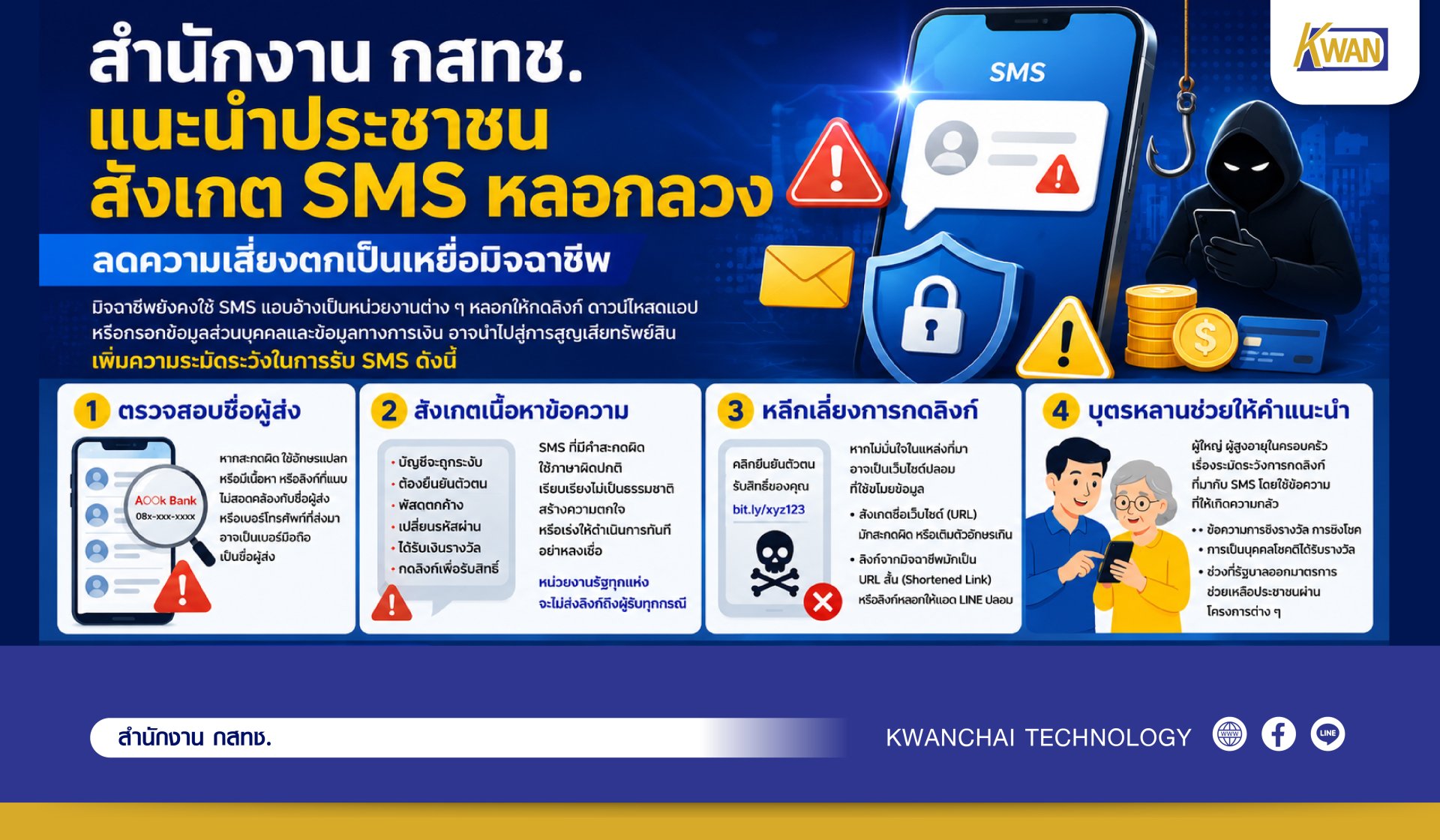
NBTC Warns Public to Stay Alert for Scam SMS and Avoid Falling Victim to Fraud
The National Broadcasting and Telecommunications Commission (NBTC) has urged the public to exercise greater caution when receiving SMS messages, as scammers continue to use text messages as a tool to deceive people.
Fraudsters often impersonate government agencies, banks, logistics companies, or service providers, attempting to persuade recipients to click fraudulent links, download malicious applications, or provide personal and financial information. Such actions could result in data theft and financial losses.
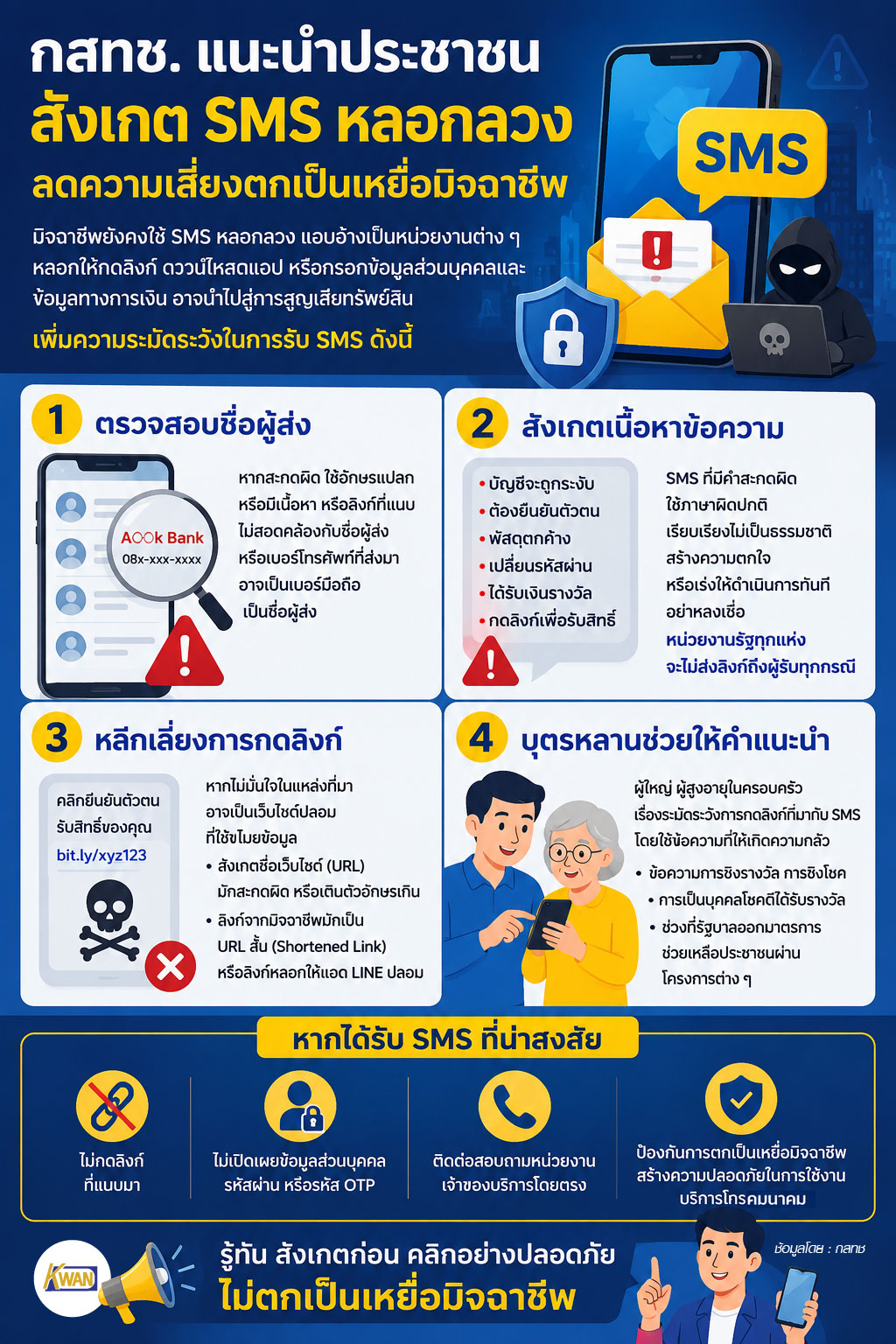
Four Ways to Identify Suspicious SMS Messages
1. Check the Sender Name
Recipients should carefully examine the sender's name and phone number. Be cautious if the sender's name contains spelling errors, unusual characters, or does not match the content or link provided in the message.
Messages sent from ordinary mobile numbers while claiming to represent a government agency, bank, or major service provider should also be treated with caution.
2. Look for Suspicious or Urgent Messages
Scam SMS messages often contain spelling or grammatical errors, unusual wording, or unnatural sentence structures. They may also attempt to create a sense of fear or urgency, pressuring recipients to take immediate action.
Common examples include messages claiming that:
* An account will be suspended
* Identity verification is required
* A package is being held or has a delivery problem
* A password must be changed
* The recipient has won a prize
* The recipient must click a link to claim a benefit or special privilege
Recipients should verify such information directly with the relevant organization through its official communication channels before taking any action.
3. Avoid Clicking Suspicious Links
Do not click links included in SMS messages if the source cannot be verified. Such links may lead to fake websites designed to steal personal or financial information.
Users should carefully check the website address (URL), particularly for misspelled domain names, unusual characters, or addresses that closely resemble legitimate websites.
Scammers may also use **shortened URLs** or links that redirect users to fake LINE accounts or other fraudulent channels.
4. Help Family Members Stay Safe
Family members can play an important role in helping older adults and elderly relatives recognize and avoid SMS scams.
Scammers often use messages designed to create fear, offer fake prizes or lucky-draw rewards, or claim that recipients are eligible for government assistance or special benefits.
Taking the time to explain these common tactics can help reduce the risk of family members becoming victims of online fraud.
What Should You Do If You Receive a Suspicious SMS?
The NBTC recommends following three simple steps:
STOP – CHECK – CONTACT
* Do not click suspicious links.
* Do not provide personal information, passwords, or OTP codes.
* Verify the information through the official website, application, or contact channel of the organization concerned.
* Contact the service provider directly if you are unsure whether the message is legitimate.
The NBTC also emphasizes that people should carefully check SMS messages **before opening any attached links**. Staying alert and taking a few moments to verify a message can help prevent the loss of personal information, financial assets, and access to important accounts.
Stay Alert. Think Before You Click.
With SMS scams becoming increasingly sophisticated, awareness is one of the most effective ways to protect yourself and your family.
Check the sender. Think before clicking. Never share your OTP. Stay safe from SMS scams.
source : National Broadcasting and Telecommunications Commission